
Panagiotis Kefalas
Panagiotis Kefalas was a member of the Filiki Etaireia and a prominent chieftain of the Greek War of Independence. He participated in military operations in the Peloponnese and was awarded the rank of General in 1822. Later, he sided with the Government faction and came into conflict with the Anti-Government forces led by Theodoros Kolokotronis. He was a close associate of Papaflessas and lost his life at Maniaki in 1825.
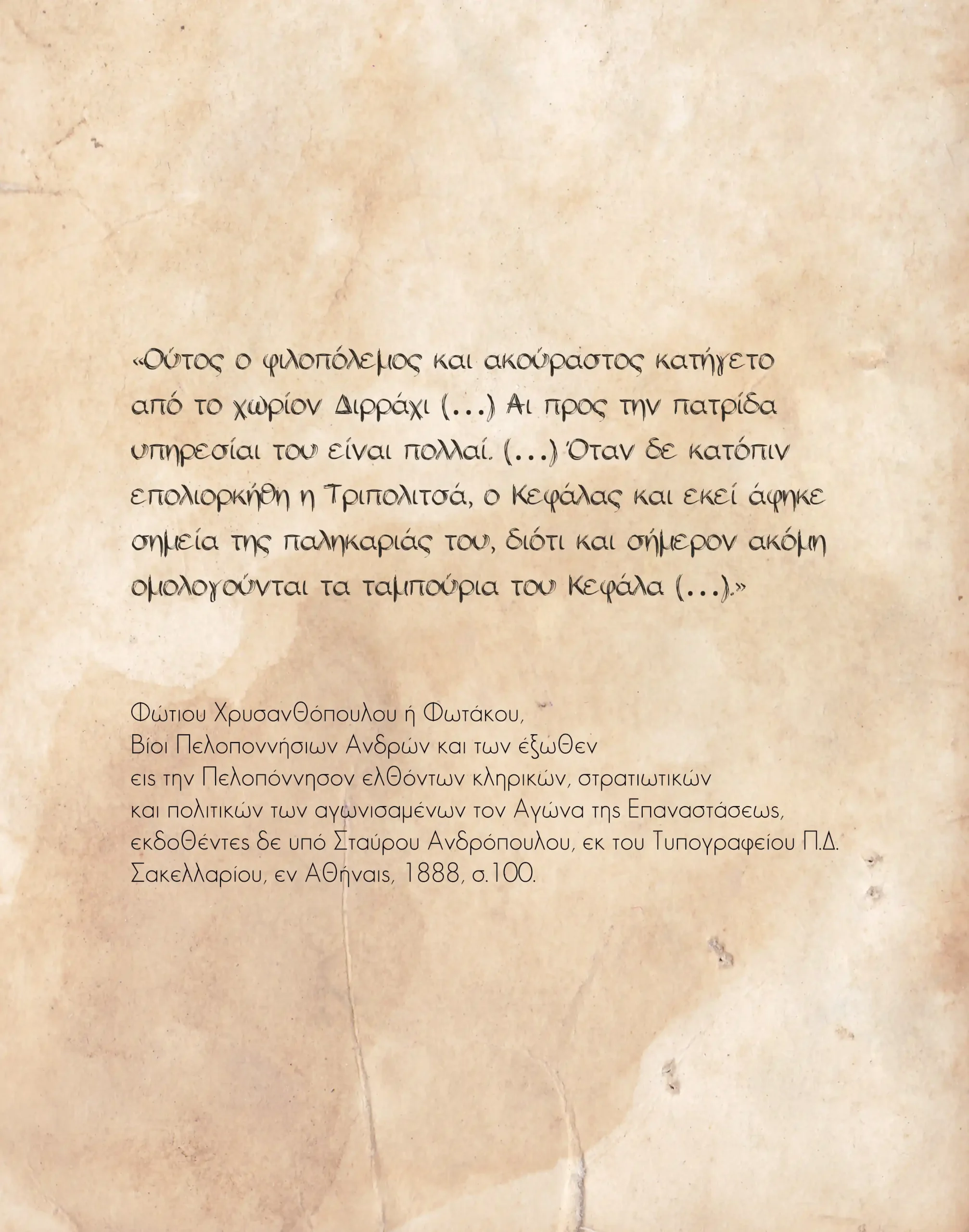
Panagiotis Kefalas was born in the village of Dyrrachi, near Megalopolis, probably around 1790. He served as the chief lieutenant of the renowned klepht Captain Zacharias Barbitsiotes and became a target during the persecution of the klephts in the Peloponnese (1805–1806), which forced him first into the mountains and later briefly to the Ionian Islands. In 1809, he returned to the Peloponnese, formed an armed band based in the mountainous region of Karytaina, and operated as a klepht in the area of Sambazika. During this period, he met the brothers Nikitas and Grigorios Dikaios (Papaflessas).
In 1819, Kefalas was initiated into the Filiki Etaireia by Papaflessas and became particularly active and devoted to its cause. In January 1821, he accompanied Papaflessas to the secret assembly of the Filiki Etaireia held in Vostitsa (26–30 January 1821), whose purpose was to organize the Revolution in the Peloponnese. In March, another secret meeting of Filiki members took place in Dyrrachi, in which he participated together with the Flessas brothers and Christos “Anagnostaras” Papageorgiou.
On 23 March 1821, as chieftain of the district of Imlakia, he led a strong armed contingent toward Kalamata, where he joined the forces of Nikitaras, Papaflessas, Mitropetrouvas, Mavromichalis, and Kolokotronis, compelling Suleiman Agha Arnaoutoglou to surrender the city. He took part in the capture of Kyparissia and camped with the Peloponnesian fighters at Karytaina, following Theodoros Kolokotronis’s plan for the capture of Tripolitsa.
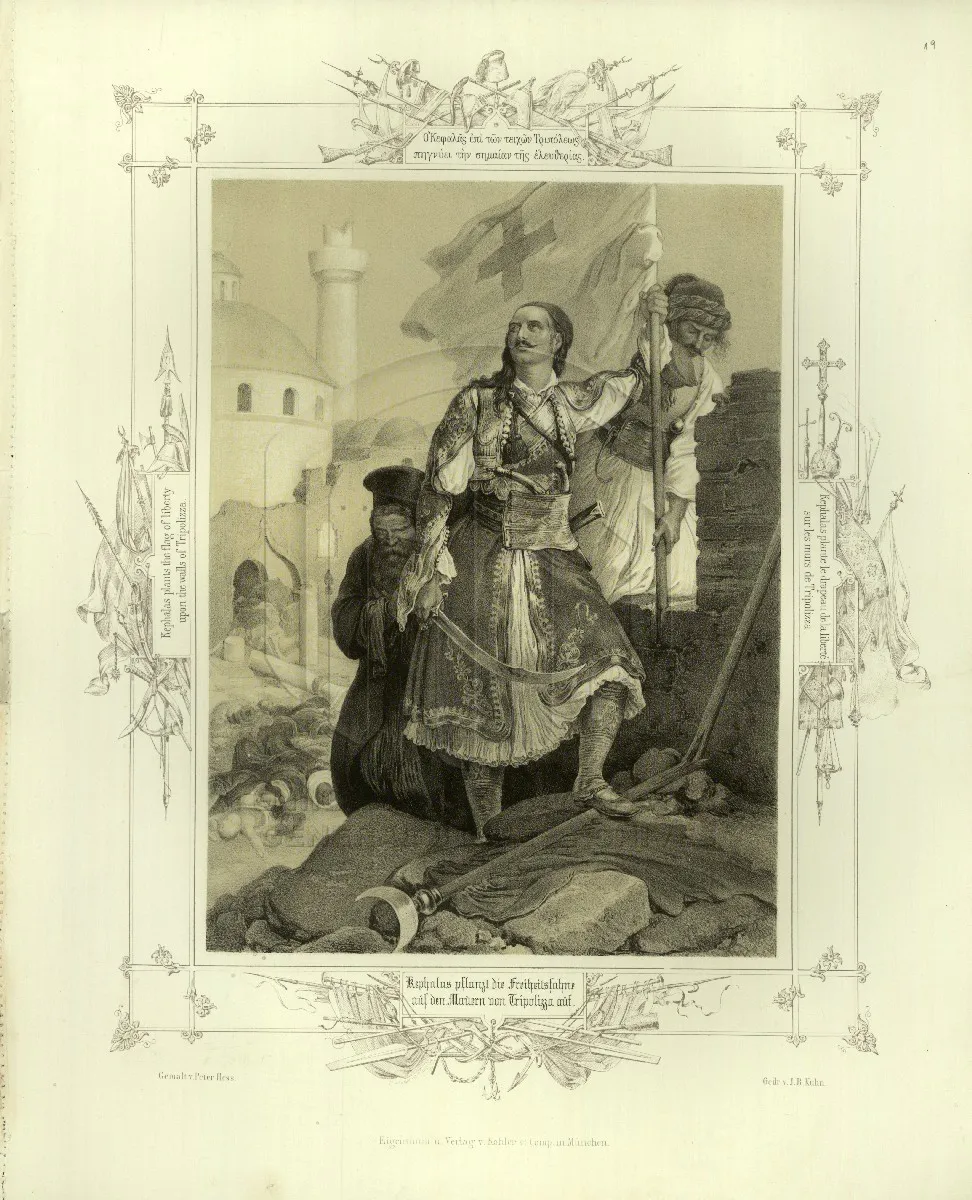
Kefalas participated in major military engagements, including the Battle of Levidi (April 1821) and the renowned Battle of Valtetsi (May 1821), where he successfully defended the western bastion. He also took part in the Siege of Tripolitsa as commander of a strong force of 600 men and entered historical memory as the “conqueror of Tripolitsa,” thanks to the imaginative depiction by the Bavarian painter Peter von Hess.
In January 1822, after a brief health setback that had temporarily brought him back to Dyrrachi, he joined the campaign at Neokastro. He later distinguished himself as a formidable fighter in the operations against Dramali Pasha, particularly at Argos in July 1822. He subsequently moved toward Attica and defended Central Greece. By decision of the Executive, Panagiotis Kefalas was awarded the rank of General in June 1823.
During the civil conflict, Kefalas supported the Government faction, largely due to his close relationship with the Flessas brothers, and came into conflict with the Peloponnesian chieftains aligned with Theodoros Kolokotronis. Although he was captured by Gennaios Kolokotronis in March 1824, Theodoros released him, allowing him to continue fighting against the Ottomans in the region.
The Battle of Maniaki, on 20 May 1825, was the final engagement in which Panagiotis Kefalas participated. Papaflessas’s decision to confront Ibrahim Pasha’s forces with minimal troops led to the defeat of the revolutionary forces and to his own death. Kefalas initially managed to escape but was killed shortly afterward in a nearby area, in the village of Margeli.