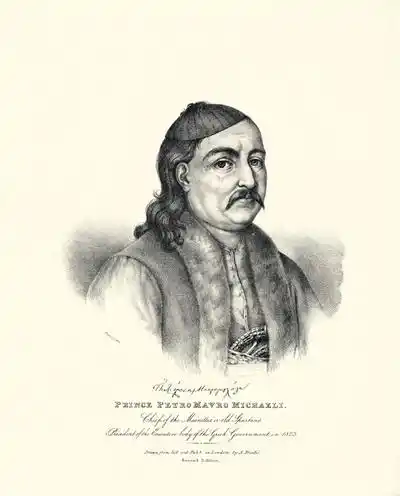
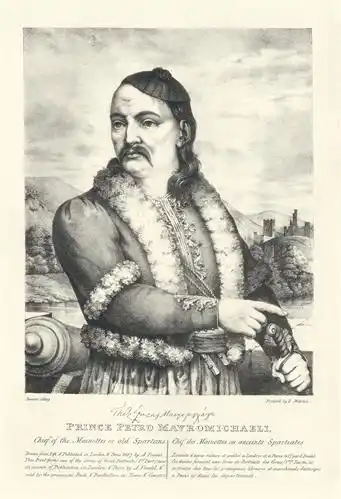
Petros Mavromichalis
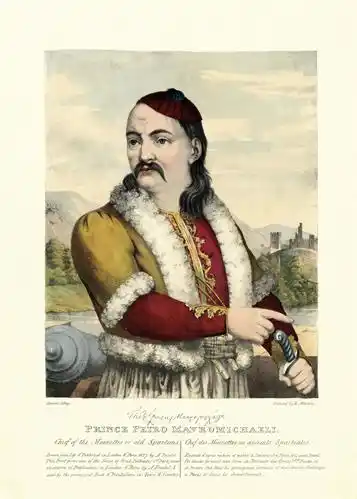
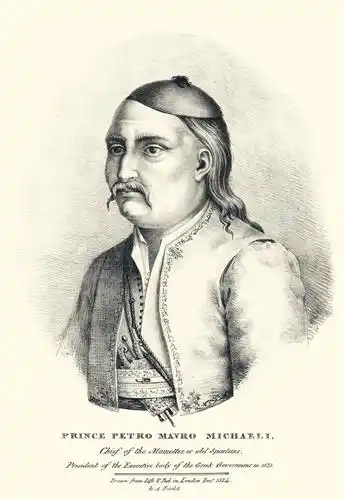
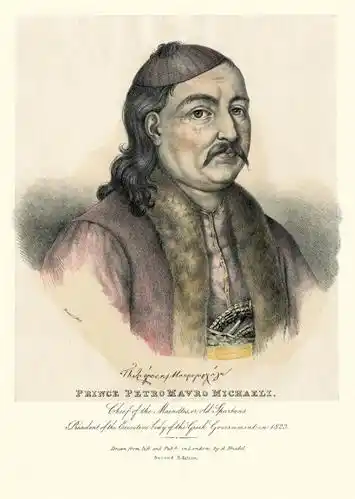
Petrobey Mavromichalis is regarded as a leading figure of the Greek War of Independence. He was the last Bey of Mani, a capable military commander and statesman who participated in key battles of the Revolution and served as a Senator of Revolutionary Greece. After independence, he remained politically active, serving as Vice President of the Council of State, participating in the First National Assembly (1843–1844), and maintaining significant influence in public affairs.
Petrobey Mavromichalis was a descendant of a prominent and affluent family of notables from Mani. He was born in Tsimova (modern-day Areopoli) in 1773 (according to another account, in 1765), the eldest son of Pierros Mavromichalis and Aikaterini Koutsogrigorakou. He married Anna Benaki, sister of the notable of Kalamata, Panagiotis Benakis, and had five sons: Elias, Anastasios, Georgios, Ioannis, and Dimitrios.
During the persecution of the klephts in the Morea, Petrobey helped many armed rebels escape to the Ionian Islands and gradually aligned himself politically with France, believing that through this alliance the Greeks could be liberated from Ottoman rule. In 1814, he was appointed Bey (governor) of Mani by the Sublime Porte. In August 1818, he was initiated into the Filiki Etaireia by the merchant Kyriakos Kamarenos from Kalamata, while staying in Kitries, Messinia. Upon his initiation, he donated 1,000 grosia to the Society and pledged an additional 5,000 grosia and “twenty thousand armed men, (…) all willing to offer their lives, though poor and deserving of mercy (…).” On 1 October 1819, the powerful families of Mani (Mavromichalides, Grigorakides, and Troupakides) signed the “Kitries Pact,” agreeing “by the power of the aforementioned solemn oaths that henceforth one soul, one accord, one will shall reign in our bodies, and no internal cause shall ever shake or weaken such a sacred bond.”
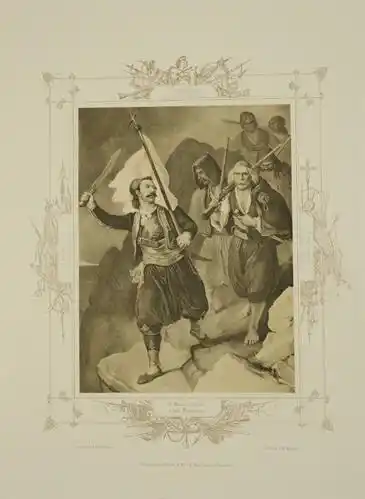
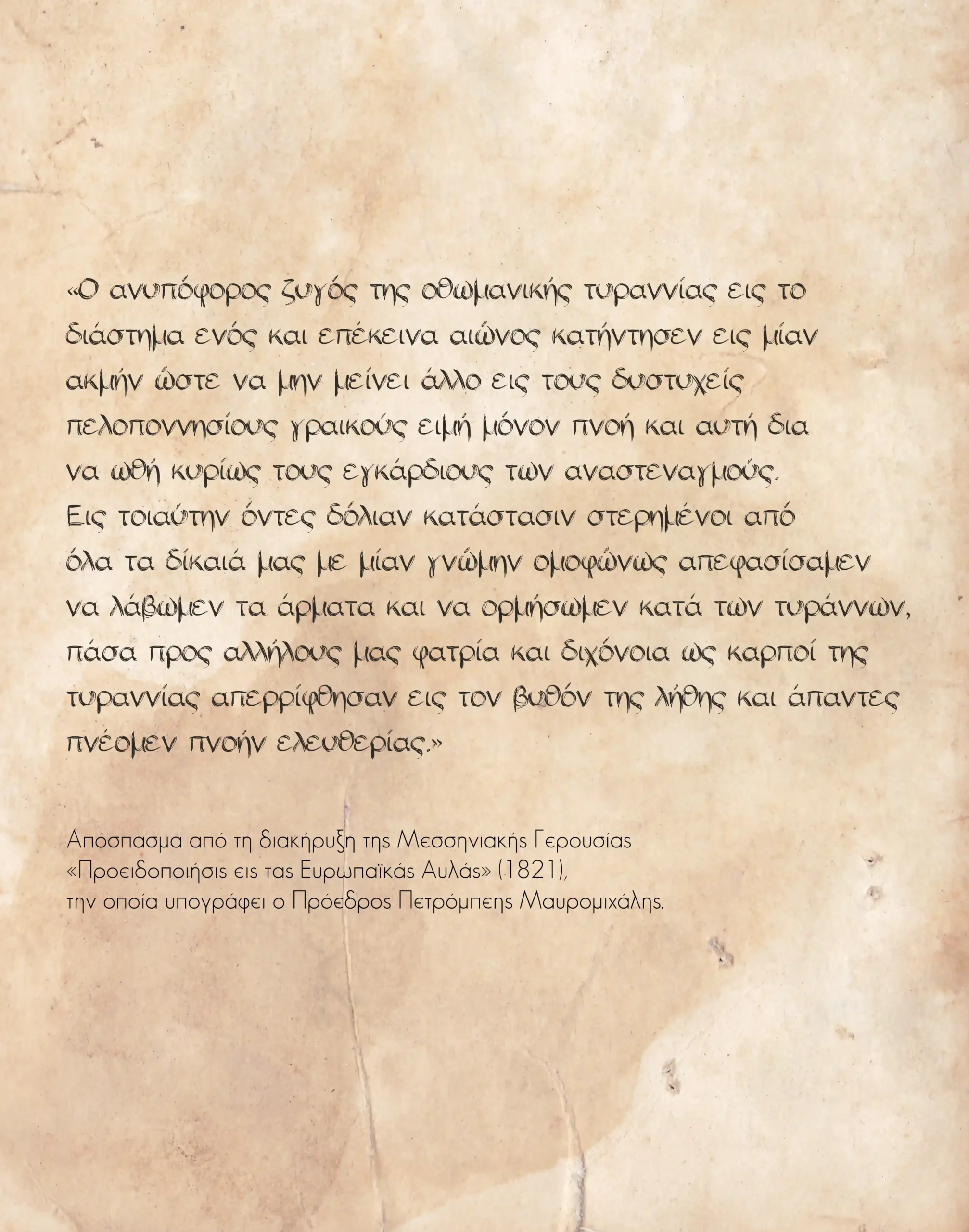
On 17 March 1821, Tsimova (Areopoli) in Mani proclaimed the Greek Revolution. Petrobey Mavromichalis, leading 2,000 armed men, marched to Kalamata, where he joined forces with the chieftains of Karytaina and compelled the Ottoman governor of Kalamata, Suleiman Agha Arnaoutoglou, to surrender the city on 23 March 1821. Two days later, the Messenian Senate was established—the first administrative body of the Revolution—with Petrobey as its President. From this position, he issued the first political and diplomatic declaration of the struggle, the renowned “Proclamation to the European Courts,” announcing the Greek nation’s decision to cast off Ottoman rule. This was followed by the Assembly at the Monastery of Saint Nicholas in Kaltezai and the founding of the Peloponnesian Senate.
Petrobey Mavromichalis played a decisive role in shaping the political course of the Revolution and held important offices. He served as Vice President of the Legislative Body at the First National Assembly of Epidaurus in 1821, President of the Second National Assembly at Astros, and President of the Executive of the Provisional Administration in 1823. He also took part in several military engagements in the Peloponnese and distinguished himself during the Siege of Tripolitsa and in operations against Mahmud Dramali Pasha. In 1822, he joined the campaign of the notables in Central Greece and participated in the First Siege of Missolonghi. During the civil war, he maintained a neutral stance. In 1825, he organized the defense of Mani and successfully prevented its capture by Ibrahim Pasha’s Turco-Egyptian army.
In 1827, he accepted the election of Ioannis Kapodistrias as the first Governor of Greece by the Third National Assembly at Troezen, and in 1828 he was appointed to the Presidency of the Panellinion and the Senate. The Mavromichalis family later clashed with Kapodistrias and opposed his policies. In the spring of 1830, Petrobey’s brother, Tzanis Mavromichalis, incited a revolt against the Governor in Mani, and Petrobey was arrested while attempting to flee to Zakynthos. The conflict culminated in September 1831, when Konstantinos and Georgios Mavromichalis—Petrobey’s brother and son, respectively—assassinated Ioannis Kapodistrias outside the Church of Saint Spyridon in Nafplio. Petrobey was released from prison in March 1832 by order of Greece’s second Governor, Augustinos Kapodistrias.
After the arrival of King Otto, he was appointed Vice President of the Council of State. During the 3 September 1843 Revolution, he supported the granting of a Constitution and was later elected senator. He died in Athens on 17 January 1848 and was buried with the honors of a lieutenant general.