Christos Papageorgiou “Anagnostaras”
Christos “Anagnostis” Papageorgiou, known as “Anagnostaras,” was a prominent member of the Filiki Etaireia and a chieftain of the Greek War of Independence. He participated in major military engagements in the Peloponnese and was distinguished for his bravery and determination. In 1823, he served as a member of the three-member committee acting as the Ministry of War.
Christos Papageorgiou, known as “Anagnostaras,” was born in 1760 in the settlement of Argilos, in the village of Poliani, Messinia. The son of a priest, he was ordained as a Reader of the Orthodox Church at a young age, intending to pursue a clerical path. This ecclesiastical title initially replaced his given name “Christos,” while his imposing physique later earned him the nickname “Anagnostaras.”
In the early 19th century, following an incident that led to the death of the notable of Leontari, Konstantinos Flessas, Anagnostaras fled to the mountains as a klepht and subsequently relocated to the Ionian Islands, serving as a maggioros (major) in the Russian army. In 1807, after the dissolution of the Septinsular Republic, he joined the French forces that had occupied the Ionian Islands.
In 1817, Anagnostaras traveled to the Russian Empire to seek compensation from Tsar Alexander I for his service in the Russian army during the Septinsular Republic. While in Odessa, alongside former Russian officers Elias Chrysospatis, Ioannis Farmakis, and Christoforos Perraivos, he met Nikolaos Skoufas. On 25 October 1817, he was initiated into the Filiki Etaireia by Panagiotis Anagnostopoulos and, having received the rank of “Apostle,” toured the Ottoman Empire to expand the Society’s network and prepare the ground for the Greek uprising. He personally initiated Theodoros Kolokotronis into the Filiki Etaireia in Zakynthos in 1819.
In March 1821, Anagnostaras and Nikitaras undertook the transport of a shipment of munitions sent by the Filiki Etaireia of Smyrna to the port of Almyros in Kalamata. To avoid arousing Ottoman suspicion, they spread the rumor that the cargo consisted of olive oil and that the armed escort was a precaution against local bandits. This ruse prompted the Ottoman governor of Kalamata, Suleiman Agha Arnaoutoglou, to request reinforcements from Mani. The Greeks then encircled the city and forced its surrender.
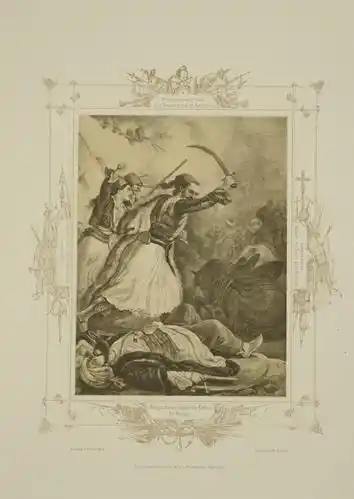
Anagnostaras led an armed unit in the Battle of Karytaina under the command of Kolokotronis and fought in the victorious Battle of Valtetsi. He was later among the chieftains who participated in the Siege and Fall of Tripolitsa. In May 1821, he attended the Assembly of Kaltezes, where the Peloponnesian Senate was established and the first constitutional document of revolutionary Greece was drafted. Two years later, the Executive appointed him to the three-member Committee of the Ministry of War, alongside Dionysios Troupakis (Mourtzinos) and Christoforos Perraivos.
During the civil war, Anagnostaras supported the Government faction. In 1824, he assumed command of the military camp at Gastouni in Elis, and in 1825 he was appointed provisional commander of the camp at the Messenian Gulf. He was called to confront Ibrahim Pasha’s forces, first at Methoni in February and then at Navarino in March 1825. He was killed in the Battle of Sphacteria on 26 April 1825.