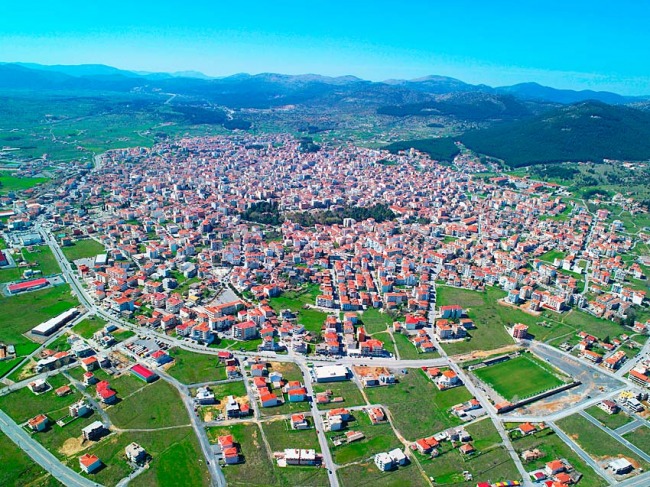
Tripoli, Municipality of Tripoli, Arcadia
Tripolitsa (modern Tripoli) was the most important administrative and military centre of the Peloponnese during the late Ottoman period. Its strategic position in the centre of the Arcadian plateau, at the crossroads of major routes connecting the Morea, facilitated its rapid development into an administrative, military and commercial hub.
After 1715, when the Ottomans regained control of the Peloponnese from the Venetians, Tripolitsa became the seat of the Mora Valesi (the highest Ottoman governor of the Peloponnese) and evolved into the region’s principal administrative centre. By the late 18th century, its population exceeded 20,000 inhabitants, the majority of whom were Muslims (mainly Turks and Albanians), while Greek Christians and Jews also lived in distinct neighbourhoods, following the Ottoman model of urban organisation. The city’s economy relied heavily on the agricultural and pastoral production of the surrounding area, as well as on artisanal and craft activity: workshops processing leather, yarn and other goods contributed to its economic vitality. Taxation, however, fell disproportionately on the Christian population. The Christian notables of the Peloponnese, many of whom maintained connections with Constantinople, were frequently summoned to Tripolitsa by the pasha, who cultivated a network of mutual obligations through the granting of privileges and tax exemptions. This relationship ensured the smooth collection of taxes and supported his political survival, as the notables could influence his standing at the Sublime Porte.
The failed uprising instigated by Russia in 1770, known as the Orlov Revolt, was followed by mass killings of Christians: around 3,000 were slaughtered, including Metropolitan Anthimos (Varvoglis), and entire neighbourhoods and churches were burned. During the same period, the city’s fortifications were strengthened with the construction of high walls, gates and towers (1785–1790), making Tripolitsa a stronghold of Ottoman control. In 1807, Veli Pasha, son of Ali Pasha of Ioannina, settled in the city with 12,000 soldiers, turning Tripolitsa into the most powerful Ottoman military base in southern Greece.
On the eve of the Greek Revolution of 1821, Tripolitsa became a strategic target for the Greek revolutionaries, as its capture would signify the collapse of Ottoman authority in the Morea. Its siege began in the spring of 1821 under the leadership of Theodoros Kolokotronis and culminated in its fall on 23 September 1821, a decisive turning point for the Revolution both symbolically and strategically.
In 1825, the city was seized by Ibrahim Pasha of Egypt, who made it his regional capital. Upon his withdrawal, in an act of retaliation, Ibrahim ordered the complete destruction of Tripolitsa. On 9 February 1827, he commanded that the walls be blown up and that public and private buildings—including mosques, churches, tekkes, inns and fountains—be set on fire. The event was recorded by the Tripolitsa-born fighter and eyewitness Rigas Palamidis. Today, the city bears the official name Tripoli and serves as the capital of the Prefecture of Arcadia and the Region of the Peloponnese.